Designing Work in the Age of AI: A Systems View of Human Performance

Designing Work in the Age of AI: A Systems View of Human Performance
By Shawn Spooner, Chief Technology Officer, billups
Artificial intelligence is advancing faster than most organizations can comfortably keep up with.
In media, especially in technical disciplines, AI adoption is no longer theoretical. Tasks that once required hours now take minutes. Structured workflows are increasingly automated. The gains are real.
But there’s a deeper question underneath the productivity curve:
What happens to human capability when friction disappears?
At billups, we’re not just implementing AI. We’re thinking about how it reshapes the system of work itself, how people learn, think, and stay engaged over time.

The Hidden Cost of Removing Difficulty
There’s a natural instinct to outsource effort.
When AI can handle complex analysis, structured problem-solving, or repetitive modeling, the temptation is to give it everything. But something subtle happens when that shift becomes total.
The work that stretches people, the work that feels challenging, is often the work that builds mastery. It sharpens intuition. It develops judgment.
If you remove all of that friction, you may increase short-term output. But you risk flattening long-term growth.
Efficiency without development is a fragile system.
Designing for Cognitive Rhythm
Human cognition doesn’t operate at a constant sprint.
Breakthrough thinking rarely happens while actively forcing a solution. It happens in the pause during reflection, during downtime, even during boredom. That space allows synthesis.
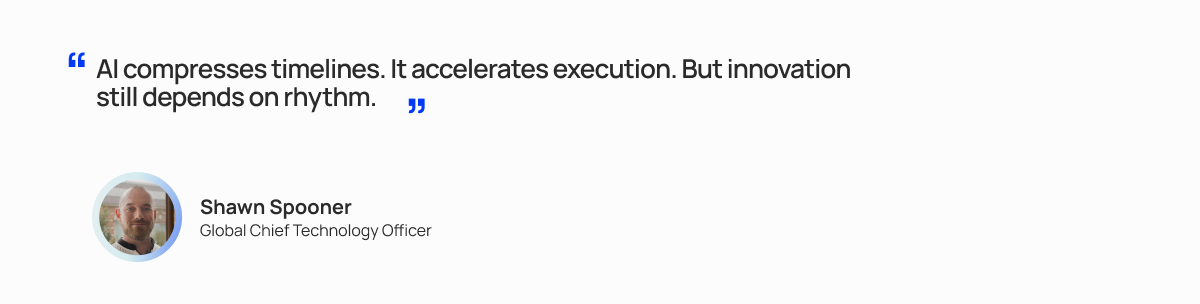
AI compresses timelines. It accelerates execution. But innovation still depends on rhythm.
If organizations optimize every workflow solely for speed, they risk eliminating the very conditions that enable deeper thinking. Designing work in the AI era means intentionally preserving space for ambiguity, iteration, and systems-level reasoning.
That’s not nostalgia. It’s performance design.

Applying This Philosophy in Practice
This mindset shapes how we build and deploy technology internally.
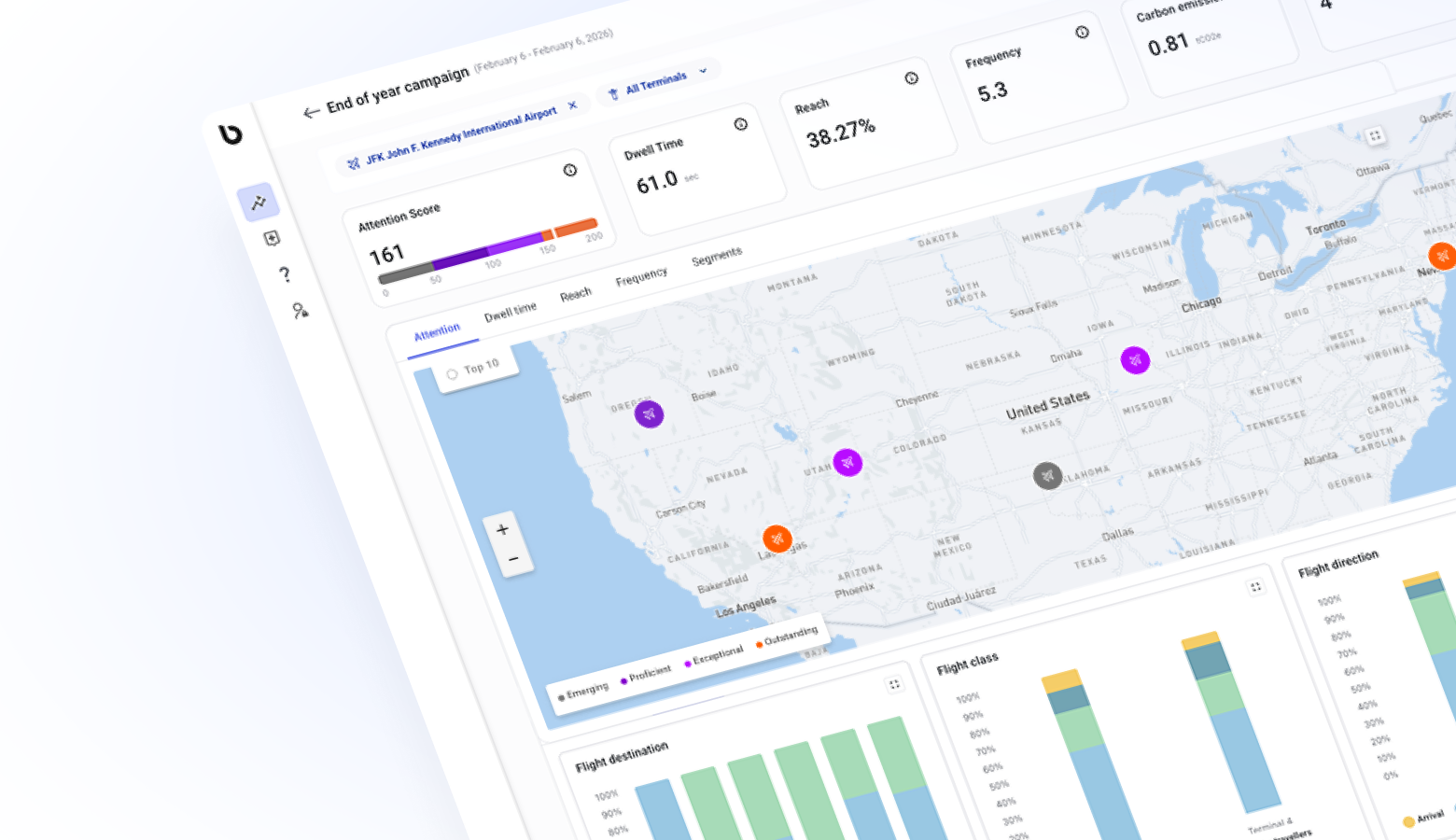
For example, when we developed audrai, our agentic AI system built specifically for Out-of-Home, the goal wasn’t simply to automate planning workflows or accelerate geospatial modeling. It was to remove repetitive, structured tasks so our teams could focus on higher-order strategy, contextual insight, and client problem-solving.
The intention is augmentation, not replacement.
AI should free people to do more meaningful work, not eliminate the parts of work that make them better at it.

Governance as a Competitive Discipline
As AI capabilities expand, enterprise scrutiny expands with them.
Clients are asking harder questions about data control, model governance, and privacy architecture. Where does data live? Who audits the outputs? How are boundaries enforced?
Responsible AI implementation requires structural rigor. Clear oversight. Defined guardrails.
In a complex ecosystem like Out-of-Home, already opaque in many ways, trust becomes a competitive advantage.
The Takeaway
AI will continue to accelerate.
But acceleration alone is not a strategy.
Organizations that treat AI purely as an efficiency lever may scale output, but at the expense of depth. Those who design systems around human cognition, curiosity, and contextual judgment will build a durable advantage.
The goal isn’t to eliminate effort.
It’s to elevate thinking.
That requires design, not default.